
Why Being Alike Is Overrated
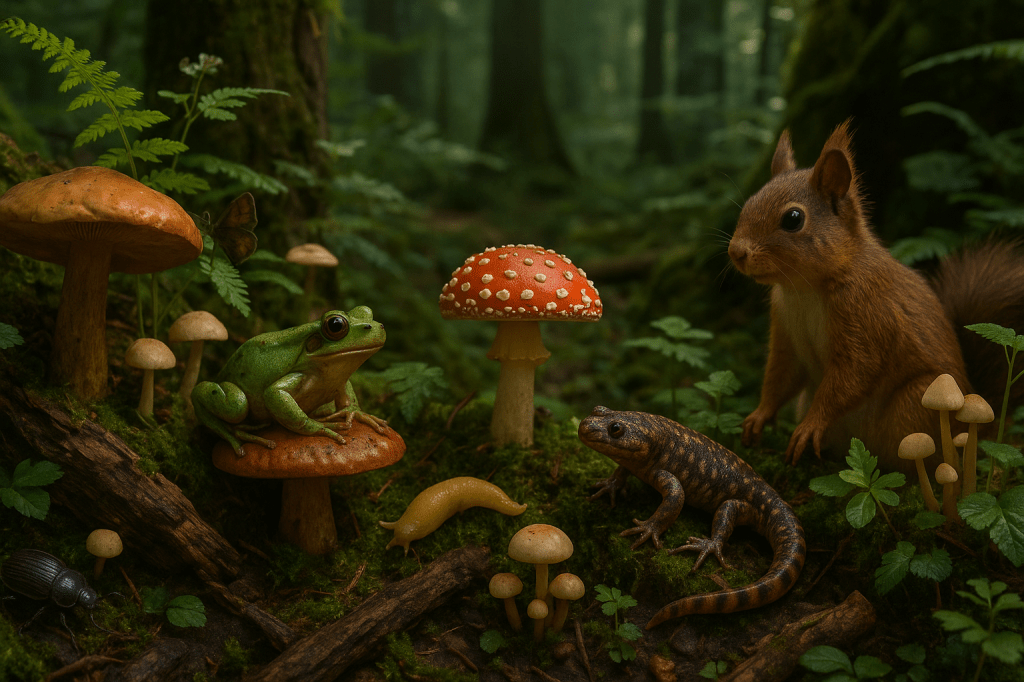
Forests, reefs, and ecosystems survive because of difference – not despite it.
Some trees reach for the sun, others anchor the soil.
Some corals provide shelter, others filter the water.
Predators keep populations in balance. Pollinators make life multiply.
Remove one element, and the whole system begins to collapse.
So why do we, as humans, still feel uneasy around the unfamiliar?
Why do we confuse belonging with being alike?
Maybe because safety feels like similarity.
Social psychologists call this the ingroup bias: our deep, ancient instinct to trust those who look, act, and think like us.
It’s a survival reflex from the days when tribes were small and resources scarce.
Sameness felt like safety – difference could be danger.
But the world is not a small tribe anymore.
Ecologists like C.S. Holling showed that resilience in nature comes from diversity – from systems that have many ways to adapt.
A single-species crop is vulnerable to one disease.
A company where everyone thinks the same is blind to its own weak spots.
A community without different voices may feel calm – until it breaks under pressure.
True strength is messy.
It means friction, disagreements, and the discomfort of hearing perspectives that challenge our own.
It means trusting that the differences we resist might be the very things that save us.
In the 1950s, psychologist Muzafer Sherif found that even deep divisions can dissolve when people share a larger purpose – a superordinate goal.
In other words: unity is not found in likeness, but in purpose.
Diversity isn’t a problem to solve – it’s the structure that keeps us alive.
Not always smooth, but always vital.
“Unity is not found in likeness – but in purpose.”
– Mindknots
